

Whether you work in-office, hybrid, or fully remote, having a part-time remote role can be a good way to gain relevant experience, explore new fields, and earn good money at your convenience. Part-time roles require you to work for less than 35 hours a week. The number of hours per week can be as little as 2 hours or as much as 20 hours but not over 35–40 hours — which is for full-time roles. Let’s look at 7 part-time remote roles to explore as a NoCode Techie and 7 key places to find the roles. Before then, here are 3 benefits of part-time remote roles.
4 Benefits of part-time remote roles
- Earn extra money: If you’re working or schooling and you need to make money on the side, having a part-time remote role is a good way to earn extra money. And even if you have a good-paying full-time job, having multiple income streams isn’t a bad idea and paid part-time roles can be a good way to supplement your monthly income.
- Flexible working hours: One good thing about part-time remote roles is that you usually don’t have stringent times to work — but it may vary based on the company. The number of hours you work in a week will depend but you’ll usually have a flexible schedule and you can choose to work at an hour of the day that works best for you.
- Opportunity to learn new skills and transition into a new field or role: Part-time roles give you the opportunity to learn new skills that will help you land your full-time remote role or transition into a new field as a NoCode Techie. Sometimes you will not be paid if you’re volunteering to work and learn, but if you’re learning new skills to prepare you for a paid role, that’s okay.
- Work from anywhere: Just as you have the flexibility to work at any time, you also typically have that same flexibility to work from anywhere when you have a part-time remote role. Whether it’s working from your home, a shared workspace in your community, a coffee shop etc — you’re free to choose the most convenient place to work from.
7 Part-time no-code remote roles to explore
You can find part-time no-code roles in various tech fields such as human resource, healthcare, education, finance, marketing etc. And there are numerous roles available for NoCode Techies to explore.
1. Virtual Assistant
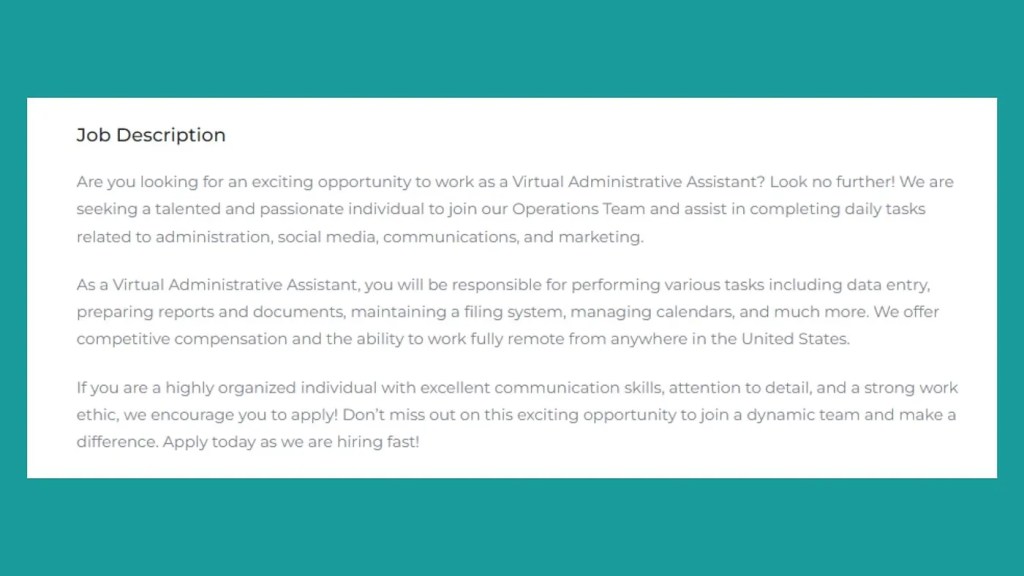
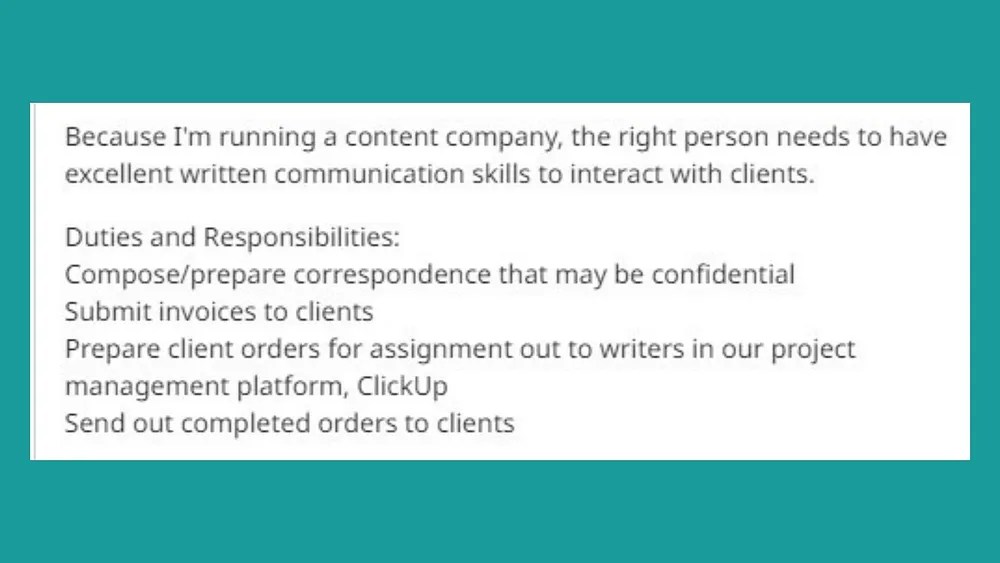
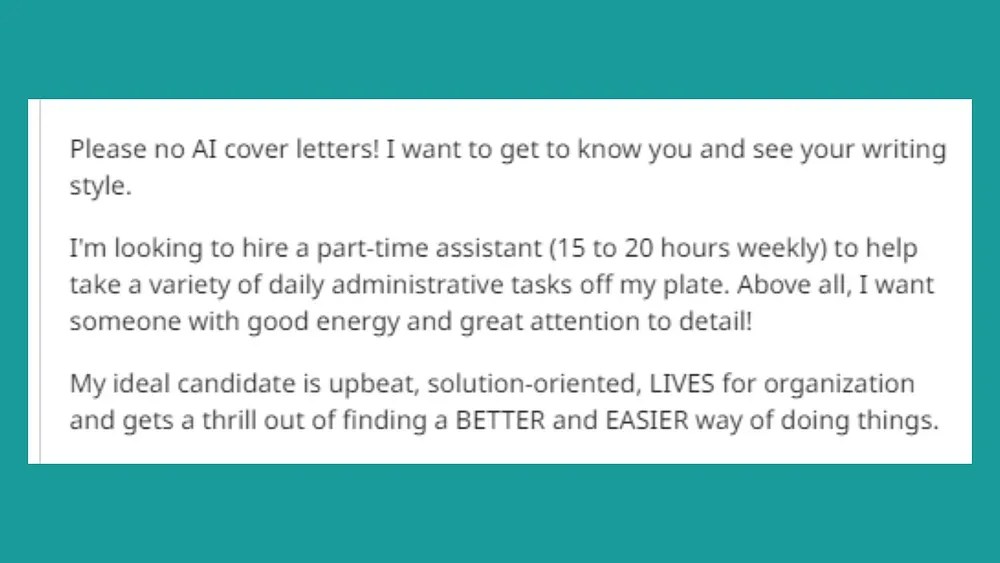
Virtual assistants are usually known for managing calendars, scheduling appointments, answering phone calls, replying to emails, and managing projects. So you may be doing any of these as a virtual assistant (VA). However, your work may vary depending on the industry, organization, or individual you’re working with.
For instance, you may have tasks including social media management, transcription, writing reports, content creation, data entry, and analysis, or even offering technical support. And if you’re in a large organization as a VA, you’ll probably be working across different departments and offering support where needed.
So if you aren’t interested in scheduling appointments and managing calendars, you still have a wide range of opportunities to explore as a virtual assistant.
2. Community Manager
Community managers are widely sought after as companies are gearing towards building communities for their audience and not just building a presence on social media. Community managers typically manage and grow an online community. The role of a community manager also involves building relationships and fostering engagement, and participation among community members.
Your tasks as a community manager will include moderating community discussions, organizing online events, creating and curating content for the community, and engaging with community members, as well as offering support to the members whenever needed. Some community platforms that you’re likely to manage include communities on Slack, Telegram, Facebook, LinkedIn, WhatsApp, Discord etc. It may be just one of the above depending on what the organization is using.
Note: Community management differs from social media management in that community management involves managing and nurturing a community of people on forums and chat groups like the ones we just saw (Slack, etc). On the other hand, social media management deals with managing a brand’s social media presence and engaging with its audience on social media platforms like Instagram, Facebook, Twitter, LinkedIn etc. More on the role of a social media manager is next.

3. Social Media Manager
Social media managers develop and execute social media strategies that increase brand awareness, drive traffic, and generate leads, and sales via social media platforms. To execute their strategies, social media managers sometimes develop content for the platforms they manage. They also schedule posts, publish, repurpose and distribute long-form content, as well as respond to comments and messages from their audience, and analyze social metrics.
Just like the other roles, the role of a social media manager may also differ depending on the organization and the human resource available to them. For instance, social media managers will be the ones creating various content–including videos and written posts–across multiple channels if the company does not have an employee for social media content creation.


4. Content Writer/ Copywriter
Content writers write blogs, whitepapers, case studies, ebooks, press releases and content for other marketing materials. Copywriters, on the other hand, write sales pages, landing pages, ad descriptions, product pages and descriptions, taglines, slogans, ad copy, email marketing campaigns, and other promotional materials.
You can work with an agency or work in-house as a part-time content writer or copywriter. If you already have a niche and industry you’re interested in, then you can start looking for companies hiring writers in those areas. However, if you’re now starting and you’re unsure of your niche, you can focus on various industries and even niches – you can always narrow it down once you get clarity.


5. Content/Copy Editor
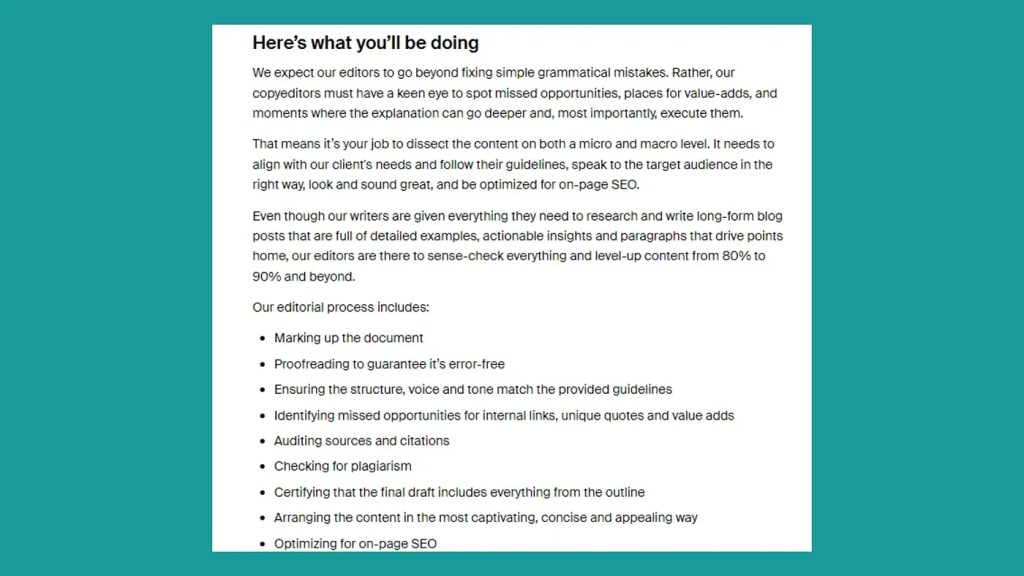
Content editors ensure content is well structured and in line with the intended purpose. They also ensure that the content is clear, concise, devoid of grammatical errors, and consistent with the tone and voice of the company. Additionally, content editors identify missing opportunities to include links, quotes, and images where appropriate. And they sometimes optimize content like blogs for search engines – depending on the organization. So a basic knowledge of SEO is a plus.
Side note: with the increased use of generative AI tools like ChatGPT, Copy AI and Jasper, content editing will be extremely relevant since organizations and agencies will need great editors to generate and edit AI content.
6. Data Entry Clerk
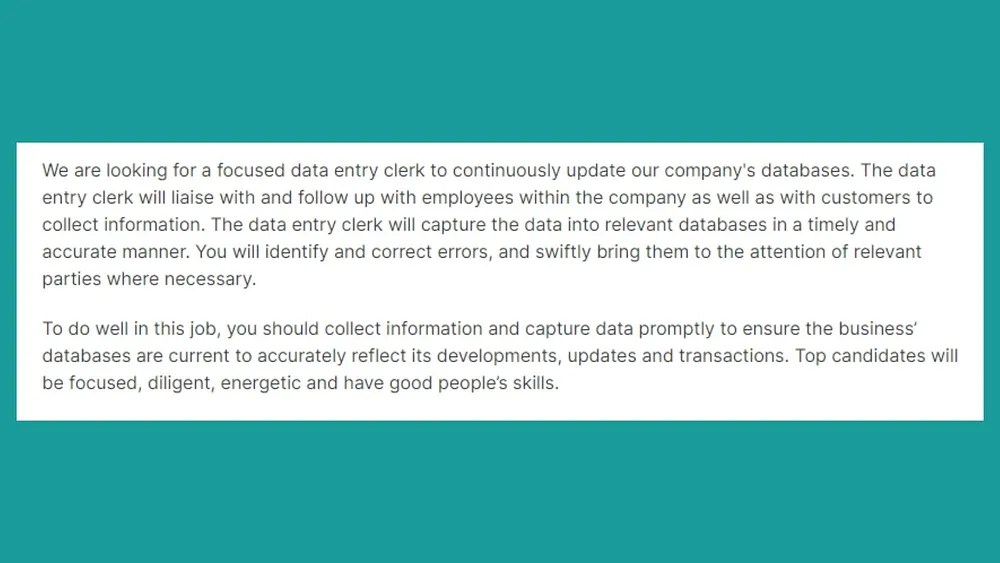
Data entry clerks are responsible for entering, updating, and maintaining various types of data in a company’s database or system. Data entry clerks also create and manage spreadsheets, as well as generate reports to help solve problems. It’s the duty of a data entry clerk to ensure that data is accurate, up-to-date, and well-organized.

7. Customer Support Specialist
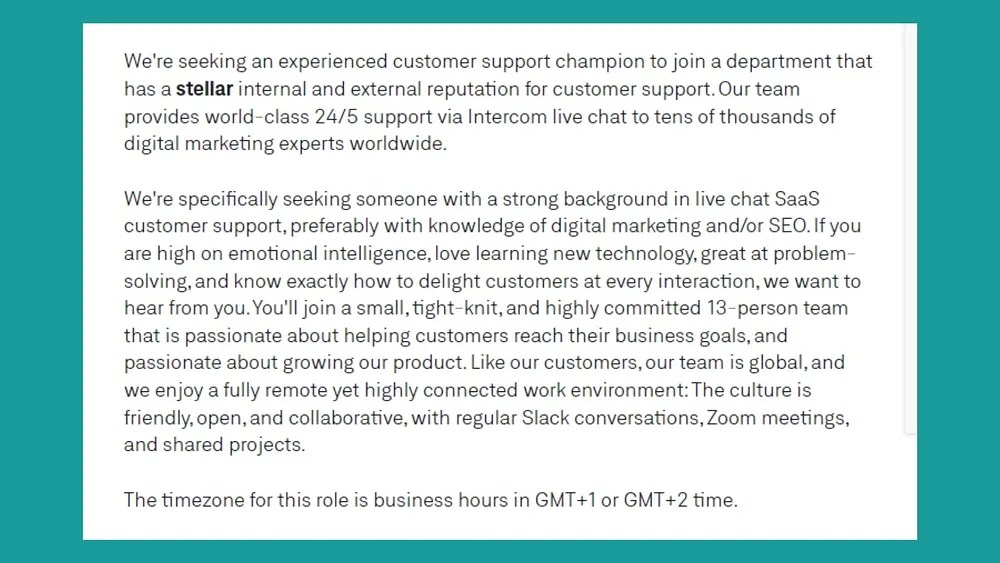
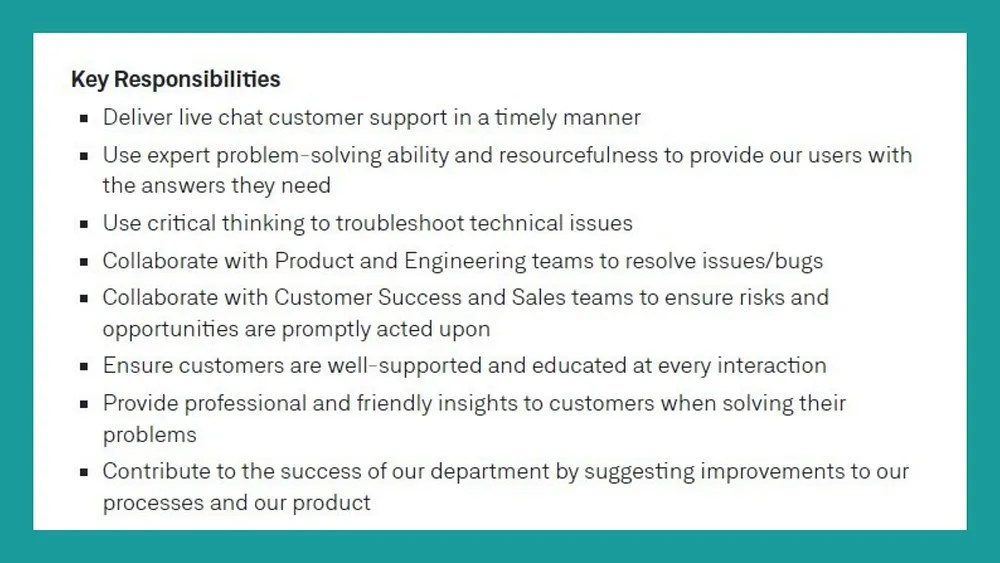
Customer support specialists provide technical support to customers and product users. They troubleshoot and address customer issues, and document inquiries in CRMs. They also track and manage CRMs to ensure the customer databases are up-to-date.
It’s worth noting that although some customer support duties may overlap with customer service representative duties, both are different – especially when it comes to the scope of work. Let’s take a look below.
Customer support specialists are more specialized and they focus on providing technical support or assistance for products. Customer service representatives, on the other hand, do not always have technical knowledge about the product and they provide service to customers by assisting customers in making a purchase or understanding the product. Customer support specialists are also closer to the product team, and customer service representatives are usually under administration.
Where to find part-time remote roles
- Job boards: Indeed, Wellfound, RemoteOK etc. Check this thread for more.
- Freelance platforms: Fiverr, Upwork
- Within your network: when people in your network need services for their projects, they may call on you to take it up if they know you can do it. They can also refer you if they know anyone hiring. So it’s good to keep people in the loop and let them know what you’re interested in.
- Company websites: check the career pages on company websites. Not all companies outsource their hiring.
- Online communities: Slack channels, Telegram groups, Discord servers etc.
- Social media platforms: Twitter, LinkedIn, WhatsApp etc
- Google search: a Google search query like “virtual assistant part-time remote roles worldwide” can give you a list of companies hiring, as well as job boards with virtual assistant part-time remote roles.
Next steps
No matter your reason for wanting a part-time remote role, there are roles out there that’ll suit your interests. This article covers only 7 of the part-time no-code tech remote roles you can find across industries. Hopefully, you found one that you’re interested in so you can begin your search, land your role and learn new skills, and earn extra money or even both.
But if you didn’t find your role, a simple or advanced Google search can give you an idea of what roles can suit your interest and then you can look on job boards for companies hiring for those roles.
Also, with AI tools like ChatGPT and Bard, you can share your interests and ask what part-time remote roles you can get. You can also copy and paste your resume into ChatGPT and ask which part-time remote roles you can secure with the skills and experiences you have. Once you know what you want, you can start exploring job boards and freelance sites, as well as asking people in your network to share available opportunities with you if they find any.
Ready to apply for your part-time role? Read this article to learn how to apply for a job in tech and actually get it.

 NoCode Techies