
Your Complete Guide to Building Meaningful Professional Relationships
Mentors act as guides. They’ve walked the path you want to take; they’ve made the mistakes, tried different approaches, learned the hard lessons, and they succeeded. A good mentor can help you avoid mistakes, speed up your progress, and navigate challenges with greater confidence.
According to research by Sun Microsystems (now owned by Oracle), employees who received mentoring were promoted five times more often than those who didn’t. However, many professionals struggle with one fundamental question: how to find a mentor.
When most people hear “mentorship,” they picture a formal setup with monthly check-ins, structured plans, and someone they can officially call “mentor”. While that works for some, mentorship today can also be informal, unstructured, and even from a distance. You might never explicitly call someone your mentor, but you can still build one of the most meaningful professional relationships of your life.
In this guide, we’ll break down the basics of mentorship and show you how to find a mentor without making it awkward or overwhelming.
Understand the Basics of Mentorship
What Do Mentors Actually Do?
At its core, mentorship is about guidance, support, and shared growth. Great mentors help you build your own path with more clarity and confidence. Here’s how:
- Share hard-earned insights: Mentors draw from their personal experiences to help you navigate challenges, avoid common mistakes, and consider new perspectives. Their lessons help you move forward more intentionally.
- Open doors: They connect you with people, communities, and opportunities that may not be immediately accessible to you. These introductions can accelerate your growth and expand your reach.
- Provide accountability and encouragement: Mentors check in on your progress, celebrate your wins, and support you through setbacks. Their presence helps you stay focused and motivated.
According to Simon Sinek, mentors have time for you. He sees mentorship as a form of friendship, one where both people benefit from the relationship, not just the mentee.
How Mentorship Differs from Other Professional Support Systems
Depending on your needs, the format, and the person you’re learning from, your support system might include not just mentors, but also coaches and sponsors.
Mentors vs Coaches vs Sponsors
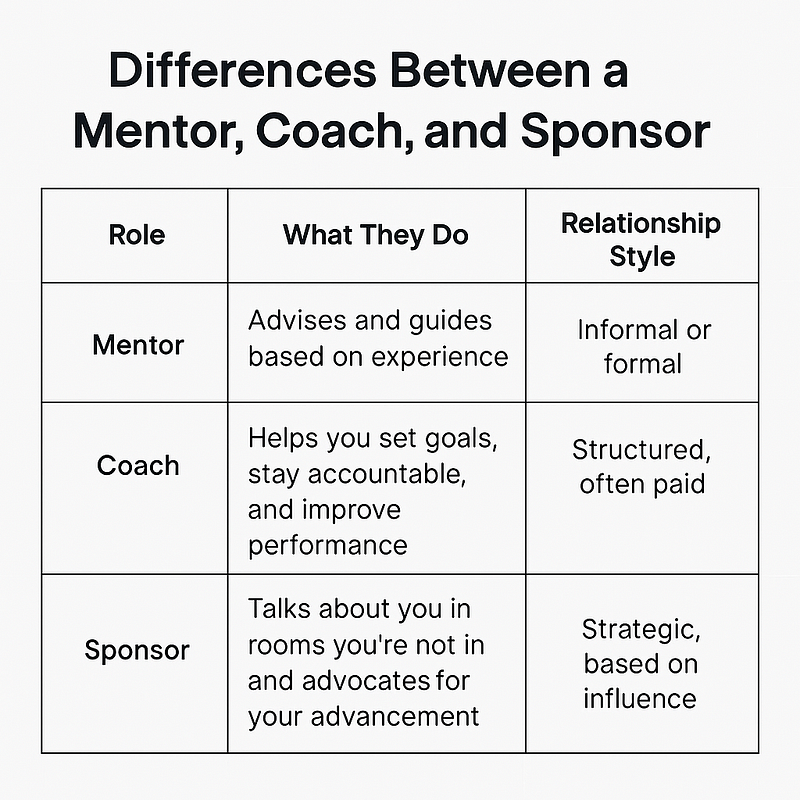
Many people use these terms interchangeably, but understanding the differences can help you build a more strategic support network. Simply put, “a mentor advises and guides you, a coach nurtures your talent, and a sponsor talks about and acts for you”. — Nation Cheong
- Mentors guide you on what to do. They share wisdom from their experience and offer advice based on their journey to help yours.
- Coaches help you execute your goals and reach your potential. Unlike mentorship, coaching is more structured and task-oriented, often focusing on specific skills or short-term objectives. Career coaches specialise in listening to your questions, doubts, and ideas about your career path, then helping you define specific goals and providing tools to overcome obstacles. You’d typically hire a professional career coach for this type of support.
- Sponsors actively advocate for you behind closed doors. While mentors offer advice, sponsors go a step further. They actively work to help you gain visibility and land opportunities that can advance your career.
All these roles serve the same ultimate goal of helping you advance your career, but their approaches differ significantly.
💡 Your mentor can become your sponsor, but your sponsor may not necessarily be your mentor.
Why You Need a Mentor
1. Accelerates Learning and Skill Development
A mentor can help you reach your goals faster by sharing practical advice, lessons learned, and resources they’ve used themselves. Instead of figuring everything out from scratch, you get a shortcut, one that helps you avoid costly mistakes and build relevant skills more efficiently.
2. Increases Confidence and Career Clarity
Having someone who’s already walked your path and succeeded can give you a major confidence boost. Mentors provide clarity when you’re unsure, validate your thoughts or ideas, and offer reassurance when you hit roadblocks.
3. Access to Opportunities
Even if they’re not official sponsors, mentors can still open doors. They might share opportunities they come across or introduce you to people in their network. And in some cases, when they’re in the position to do so, mentors do advocate for you, essentially stepping into the role of a sponsor.
💡 You may never call someone “my mentor,” but if they’re guiding you, offering insight, and helping you grow, they’re mentoring you. Don’t let the lack of a formal title keep you from recognising or nurturing a mentorship relationship.
How to Prepare for Your Mentorship Search
The best mentorships happen when you’re clear about why you want a mentor and what you’re hoping to gain from the relationship. Here’s how to prepare:
1. Understand Your Motivation
Take time to assess yourself and discover what’s driving your search for mentorship. Ask yourself:
- Why do I want a mentor right now?
- Am I making a career transition?
- Do I want to build new skills or accelerate my current path?
- What are the biggest challenges I’m facing?
If you’re vague about your needs, it’ll be harder to find the right mentor or to build a meaningful connection when you do.
2. Identify Your Career Goals and Challenges
Be specific. The clearer you are about what you’re trying to achieve, the easier it becomes to find someone who can help you get there.
For example, instead of saying “I want to advance my career”, clarify exactly what advancement looks like to you. Do you want to reach a specific role, earn a certain salary, develop particular expertise, or build a business? The more specific you are, the easier it becomes to identify mentors who can help you get there.
Subsequently, identify your challenges. Reflect and uncover the things standing between you and your goals. Are they skill gaps, lack of network connections, unclear strategy, or confidence issues? Understanding your challenges helps you identify what type of guidance you need most.
3. Determine What Kind of Mentor You Need Most
Once you know what you need, it’s time to define who can help. Build a “mentor wishlist” that outlines your ideal mentors’:
- Industry & Background: Do you need niche expertise or a broader perspective?
- Career Path: Look for someone who’s walked a path similar to where you’re headed.
- Values & Style: Align on values and communication preferences for smoother interactions.
- Experience Level: Choose someone a few steps ahead; recently experienced mentors often offer relevant guidance. That said, don’t rule out more seasoned professionals if they align with your needs.
- Accessibility: Aim for someone approachable and available, not just aspirational. A mentor who’s too busy or distant may not offer consistent support.
“A mentor is someone who always has time for you.” — Simon Sinek
💡 Consider your timeline. Are you looking for help with immediate decisions, or are you thinking about long-term career development? This affects both the type of mentor you need and how you approach the relationship.
4. Set Realistic Expectations
Before you start reaching out, it’s important to manage your expectations. Note:
- Mentorship is not the same as coaching. Mentors offer guidance, not step-by-step plans.
- Time is a factor. Most professionals are busy. In the early stages, conversations may be asynchronous or irregular, and that’s okay.
- Mentorships often evolve organically. You might want a structured relationship, but many mentoring experiences are informal and flexible.
- Be ready to adapt. The person you thought would be ideal might not have the bandwidth. Someone unexpected might end up being exactly what you need.
Setting realistic expectations helps you approach potential mentors with respect, patience, and openness. And the best part? These are qualities that foster better relationships in the long run.
How & Where to Find Mentors
Potential mentors are everywhere. You just need to know where to look and how to approach them strategically. Let’s explore both traditional and unconventional sources for finding the guidance you need.
1. Within Your Current Workplace
If you work in a large organisation, you might already have access to a formal mentorship program. Many companies run internal mentoring initiatives to support professional development.
In smaller companies, mentorship may be less structured, but still very possible. A manager, team lead, or even a senior colleague could become an informal mentor, especially if they show interest in your growth and you build trust over time.
2. Inside Your Existing Network
You may not need to look far to find mentors for your career:
- Colleagues and former colleagues: Look out for people who are slightly ahead of you on a similar path. If they match your “mentor wishlist”, don’t hesitate to reconnect and start a conversation.
- Alumni networks: School and workplace alumni networks are full of people who’ve taken different career paths. Many are open to giving back, especially when they see someone genuinely interested.
- Industry associations and communities: Join relevant professional organisations or communities in your field. Participate, ask thoughtful questions, and contribute — mentorship often develops organically from these spaces.
- Conference speakers and workshop leaders: If you attend events, take note of speakers who inspire you. Follow up with a thoughtful message, especially if you engaged with their content during the event. These connections may grow into mentoring relationships over time.
3. Online Platforms and Apps
The internet has made finding a mentor more accessible than ever:
- LinkedIn: Use LinkedIn’s search tools to find professionals by job title, company, or industry. Read their profiles carefully to understand their journey, experiences, skills, and values. It’s a bonus if they create content; you’ll learn more about their thinking and whether their style aligns with yours.
- Mentorship platforms: Sites like ADPList offer free access to mentors in tech, business, and more.
- Other free resources: Forums like Reddit (e.g., r/careerguidance) and online professional groups can also yield surprising connections.
4. Structured Mentoring Programs
If you prefer a formal approach, you can explore guided experiences:
- Corporate mentorship initiatives within your current employer
- Industry association mentorship schemes
- Non-profit or community-led programs (e.g., the Freelance Coalition for developing Countries [ FCDC ] or local youth development networks)
- University alumni mentoring programs
5. Unconventional but Effective Sources
Mentorship doesn’t always have to be one-on-one or even personal to be impactful.
- Mentors from afar: You can “adopt” mentors by consuming their books, blogs, podcasts, and talks. You may never meet them, but you’ll still learn.
- Reverse mentoring: Sometimes, mentorship flows both ways. Younger or less experienced professionals can offer valuable insights.
- Peer mentorship circles: These are small groups of professionals at a similar level who support each other’s growth.
- Online communities and mastermind groups: Niche Slack channels, Discord servers, or LinkedIn communities can provide peer learning and even mentoring opportunities.
How to Approach Potential Mentors & Build Authentic Connections
You’ve identified potential mentors and compiled your list. Now comes the crucial part: making contact. Your first instinct might be to reach out and directly ask someone to be your mentor, but this approach often backfires. Even people who know you well might feel pressured or overwhelmed by such a direct request.
The secret to successful mentorship lies not in asking for it, but in building genuine relationships that naturally evolve into mentorships.
Why the Direct Approach Often Backfires
When you ask someone to “be your mentor,” you’re essentially asking them to make an open-ended commitment to an undefined relationship. This creates several problems:
- It feels overwhelming: The term “mentor” carries weight and implies ongoing responsibility. Busy professionals may immediately think about time commitments they can’t make.
- It’s impersonal: A direct mentorship request suggests you see them as a resource rather than a person, which doesn’t create the foundation for a meaningful relationship.
- It puts pressure on the relationship: Once someone agrees to “mentor” you, both parties may feel constrained by expectations about what that should look like.
- It skips the relationship-building phase: Great mentorships are built on mutual respect and genuine connection, not on formal agreements only.
So, What Should You Do?
Engage Before You Ask
The most effective approach is to focus on building a genuine professional relationship without the pressure of formal mentorship labels.
Start by getting on their radar in a meaningful way:
- Follow their content across platforms: Find them on LinkedIn, Twitter, industry publications, or their newsletters, podcasts, or blogs. This will help you become familiar with their perspectives, interests, and communication style.
- Engage with their content: Leave insightful comments, share their posts, ask questions, or share relevant experiences. This helps you stand out as someone who genuinely engages with their ideas.
- Share and reference their content. When you share their articles or mention their insights in your own posts, tag them. This shows you value their expertise and helps build recognition.
This approach shows curiosity, respect for their time, and a willingness to learn, without demanding a long-term commitment upfront.
Use the Informational Interview Approach
Instead of asking for mentorship, ask for an informational interview. This feels more specific, time-bounded, and manageable for the potential mentor. Frame it as seeking advice or insights about their career journey, industry trends, or specific challenges you’re facing.
An informational interview request might sound like: “I’m particularly interested in your transition from [previous role] to [current role]. Would you be willing to share insights about that journey over a brief coffee chat or phone call?”
This approach works because:
- It’s specific and time-limited
- It shows you’ve researched their background
- It focuses on their expertise rather than your needs
- It feels like a conversation rather than a commitment
How to Craft Compelling Outreach Messages
- Do your homework first: Before reaching out, research their background thoroughly. Look for shared connections, common experiences, similar educational backgrounds, or aligned interests that can serve as conversation starters.
- Find genuine common ground: Maybe you attended the same university, worked in similar industries, or face comparable challenges. Leverage any of these.
- Be specific about what caught your attention: Reference a particular article they wrote, a talk they gave, or a career move they made that resonates with your situation.
- Keep it concise but personal: Your initial message should be brief enough to read quickly but personal enough to show you’ve done your research.
Example: “I came across your LinkedIn article about transitioning from engineering to product marketing and found your insights about building credibility in a new industry particularly valuable. As someone currently navigating a similar transition, I’d love to learn more about your journey.”
Need help getting started? We’ve created message templates for outreach and follow-ups, available on Gumroad.
How to Build an Organic Mentorship
Once the connection is made, the relationship begins to take shape. This is where mentorship often forms naturally.
- Share your goals, interests, and the progress you’re making.
- Ask thoughtful follow-up questions, not just “What should I do?” but “Here’s what I tried, what would you recommend next?”
- Keep them updated. When you apply their advice or follow through, let them know. It shows that their time is respected and impactful.
- Express gratitude. A quick thank-you note or a public shoutout can go a long way.
Over time, these small interactions can build a strong foundation for an ongoing mentorship, even without anyone ever saying the word “mentor.”
How to Maintain and Nurture A Mentorship Relationship
Finding a mentor is just the beginning. The real impact of mentorship lies in how you maintain and nurture the relationship over time.
1. Keep It Light but Intentional
The most effective mentorships often feel natural and flexible rather than overly formal. Still, it’s important to be intentional. Early on, agree on a cadence and format that works best for both of you. Additionally, respect their time. Mentors are usually busy professionals, so be considerate about when and how often you reach out.
2. Stay in Touch and Show Progress
Let your mentor see how their guidance is helping you. A quick update on milestones or challenges can go a long way. When they give advice, apply it where relevant and share the results. It’s one of the best ways to show appreciation. Celebrating your wins with them and acknowledging their influence reinforces the value of the relationship.
3. Go Prepared
Before any meeting or catch-up, take time to prepare. Go with thoughtful questions, share updates, or raise specific topics you’d like input on. Always follow through on agreed actions or next steps. This demonstrates reliability and keeps the relationship moving forward.
4. Show Appreciation and Give Back
Mentorship isn’t one-sided. Even if you’re the main beneficiary, there are still ways to give back. You might share resources, offer introductions, or recommend books or podcasts they’d enjoy. Simple gestures like a thank-you note or a public shoutout can strengthen the bond and show your gratitude meaningfully.
7 Common Mentorship Mistakes to Avoid
As valuable as mentorships are, there are a few common mistakes that can quickly strain or stall them:
- Being overly demanding or entitled: Respect their time. Don’t expect constant availability or personal coaching.
- Showing up unprepared: Don’t wing it. Go into conversations with clear topics and questions.
- Only taking, never giving: Look for ways to reciprocate, even if it’s just sharing opportunities, feedback, gratitude, or small wins.
- Expecting formality every time: Many mentorships are informal and fluid, and that’s perfectly okay.
- Overwhelming your mentor with constant messages: Spread out your requests and check-ins. Let the relationship breathe.
- Not recognising boundaries: Mentors aren’t therapists or job placement officers. Be clear on what to expect.
- Not knowing when it’s time to move on: If your goals change or the relationship has run its course, that’s fine. It’s okay to transition gracefully.
💡 Pro Tip
- One mentor can’t meet all your needs. That’s why many professionals benefit from having multiple mentors across different areas of growth.
- Document your mentorships and build a portfolio. This helps you build well-rounded support and guidance across the various stages of your career.
What Next?
Start where you are.
Mentorship doesn’t have to begin with a grand ask or a formal label. Often, the most impactful mentorships start with a simple conversation, a thoughtful question, or a shared interest.
Begin by clarifying your motivation, defining your goals, and connecting with people who can guide you along the way.
Found this helpful?
✔️ Share it with a friend who’ll find it helpful
✔️ Subscribe to the NoCode Techies newsletter for biweekly content on remote work, transitioning careers, and excelling as a NoCode Tech professional

 NoCode Techies